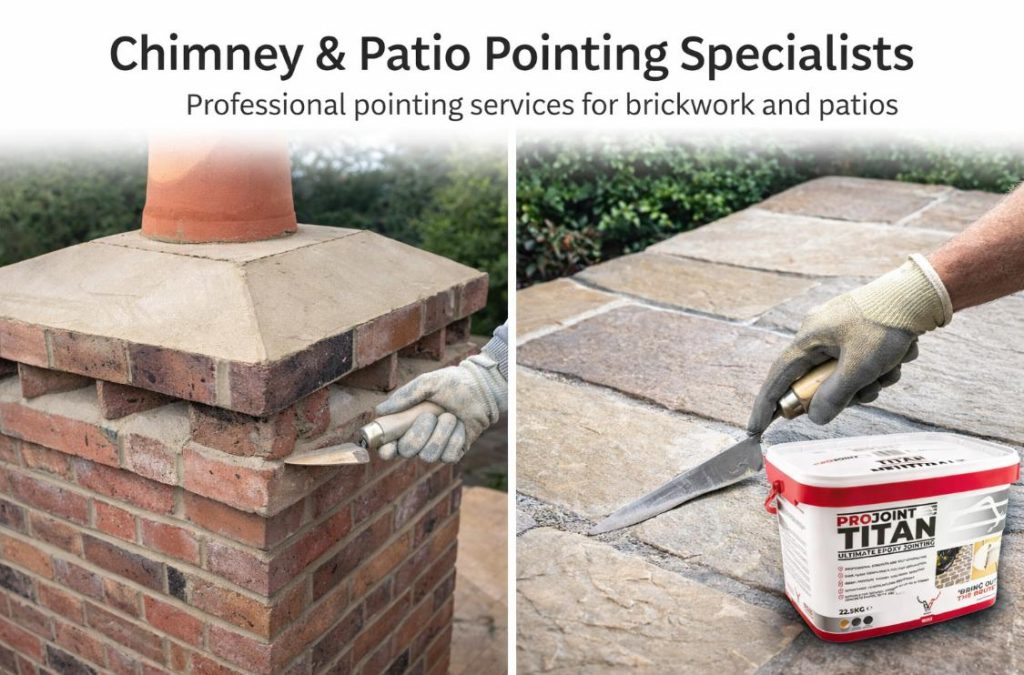
Raking out and repointing tired or failing mortar, in sand-cement or lime mortar depending on the age and construction of the wall.
About This Service
Brick Repointing Across Hampshire
Mortar is designed to be the sacrificial part of a wall — it weathers so the bricks do not. Once it has receded, cracked or gone soft, water gets into the wall itself, and what was a straightforward repointing job becomes brick replacement or worse. Repointing is one of those maintenance jobs where timing saves real money.
Signs your pointing needs attention
Mortar you can rake out with a screwdriver or that crumbles to sand in your fingers
Joints noticeably recessed compared with the face of the brick
Damp patches appearing inside on an outside wall
Brick faces spalling or flaking, usually a sign water is already getting in and freezing
Green growth or persistent staining along particular joints
Sand and cement, or lime?
This decision matters more than most homeowners realise. Older solid-wall properties — and Hampshire has plenty around Winchester, Bishops Waltham and Romsey — were built to breathe, with soft lime mortar that lets moisture move out through the joints. Repointing those in hard modern cement traps water in the brick, and the brick faces blow instead. We use lime where the building calls for it and sand-cement where it does not.
How the work is done
Joints are raked out to a proper depth rather than skimmed over, brushed clean, dampened where needed and repointed to a profile that matches the rest of the building. Skim-pointing over failed mortar looks acceptable for a season and then falls off in sheets.
Free survey and written quote. Insured tradesmen and a 12-month workmanship guarantee.
Look for mortar joints that are visibly recessed more than 10mm, crumbling or powdery mortar that you can remove with a fingernail, water staining appearing on internal walls after rainfall, damp patches or efflorescence (white salt deposits) on external faces, or vegetation growing in joints. In Hampshire's freeze-thaw winters, deteriorating mortar accelerates quickly once moisture gets into the joints. Early repointing is significantly cheaper than repairing the structural damage that follows if left.
The correct mortar depends entirely on the age and type of brickwork. Bricks fired before approximately 1950 are typically softer than modern bricks and must be repointed with a lime-based mortar — usually NHL (natural hydraulic lime) in a ratio suited to the brick type. Using modern sand-and-cement mortar on soft bricks traps moisture inside the wall and causes the brick faces to spall (break away), creating an expensive repair. Modern brickwork built after 1950 can generally be repointed with a sand-and-cement mortar matched in colour to the original. We assess the brickwork type before recommending a specification.
Professionally repointed brickwork using the correct mortar specification should last 20 to 30 years or more. The lifespan depends on the quality of the mortar mix, how well the joints were prepared (raking out to sufficient depth), and exposure to weather. South and west-facing elevations in Hampshire face more wind-driven rain and will weather faster than sheltered aspects. We rake out joints to a minimum of 15–20mm depth before repointing to ensure the new mortar has adequate key.
Ready to Transform Your Outdoor Space?
Moore & Sons are Hampshire's trusted specialists
for Repointing.
Contact us today for a free, no-obligation quote.